
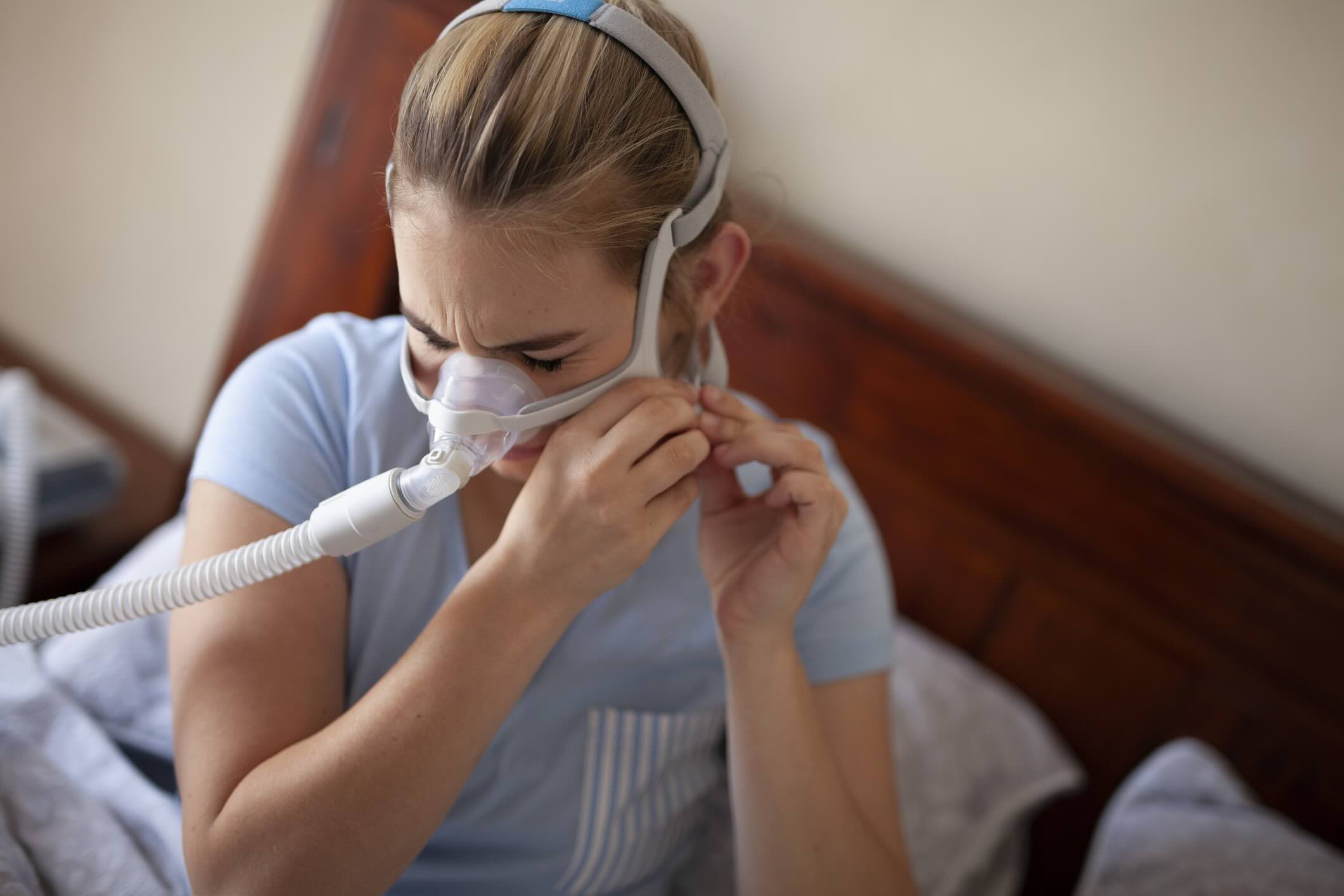
If you’ve been waking up with red marks, raw patches, or an itchy rash where your CPAP mask sits, you’re not dealing with an unusual problem. You’re dealing with one of the most common (and most fixable) complaints in CPAP therapy.
You may have already been hitting up ChatGPT with questions about “CPAP skin irritation,” maybe it’s “CPAP skins,” maybe it’s “cloth CPAP mask.” They’re all variations on the same question: is there something I can put between this mask and my face to make this better?
The answer is yes. As the makers of Snugz Mask Liners for CPAP Machines, let us share from our experience what it is that’s likely causing your irritation, what that category of products actually is, and what to look for when you’re choosing one.
Why CPAP Masks Cause Skin Problems
The short version: silicone cushions and skin don’t make great overnight companions.
CPAP mask cushions are made from silicone because it’s flexible enough to form a seal against the contours of your face. But silicone also traps heat and moisture. Over the course of a night, that means a warm, damp environment pressed directly against your skin for seven or eight hours, conditions that cause irritation even without any sensitivity to the material itself.
For many users, the problem goes further. CPAP dermatitis — a genuine allergic or contact reaction to mask materials — is more common than most people realize. Research has found that up to 50% of CPAP users report some form of skin allergy or abrasion. The silicone cushion is usually the main culprit, but headgear materials, mask frame plastics, and even cleaning product residue can all contribute.
Then there’s the pressure issue. Most users who experience skin irritation have also, at some point, tightened their straps harder than they should, likely because a leaky mask is miserable, and tightening feels like the fix. It usually isn’t, but it does create pressure marks, skin breakdown, and in persistent cases, pressure sores. The skin on the bridge of the nose is particularly vulnerable.
The result is a frustrating loop: irritated skin makes it harder to get a comfortable fit, a poor fit leads to leaks, leaks lead to tightening, and tightening makes the irritation worse.
What Are “CPAP Skins”?
If you’ve searched for solutions and landed on terms like “CPAP skins,” “CPAP cloth mask,” or “mask liner,” you’ve found the right category, even if the naming is a little inconsistent across the internet.
CPAP skins are fabric barriers designed to sit between your mask cushion and your skin. The idea is straightforward: replace the silicone-to-skin contact with a soft, breathable fabric interface instead. No more direct silicone contact, no more moisture trap, no more pressure marks from a hard cushion edge pressing into your face.
Done well, a CPAP skin does two things at once. First, it physically removes the irritant — the mask material — from direct contact with your skin. Second, it manages moisture. A good liner is made from moisture-wicking fabric that actively pulls sweat and oils away from the skin rather than letting them sit and build up overnight. Your face stays cooler and drier, and the mask stays cleaner longer.
That’s where Snugz comes in. Snugz CPAP mask liners are made from a soft blend of moisture-wicking nylon and spandex that wraps snugly around the mask cushion. They’re designed to fit both full-face and nasal masks, stretch to conform to the cushion shape, and stay in place throughout the night so that the protective barrier between your skin and the silicone actually stays where it belongs.
Not All CPAP Skins Are the Same
Because the category goes by several different names and includes everything from purpose-made liners to improvised fabric solutions, it’s worth knowing what separates a product that works from one that creates new problems.
Material matters most.
A liner that doesn’t wick moisture is really just adding a layer of fabric that will get damp and warm the same way the silicone does. Look for moisture-wicking fabrics specifically. Snugz uses a nylon-spandex blend chosen for breathability and softness, not just for stretch.
Fit matters nearly as much.
A liner that bunches, shifts, or hangs loose creates its own pressure points and can actually introduce leaks at the edges. A CPAP skin should conform to the cushion shape and stay put. Snugz is designed as a one-size-fits-most product with enough stretch to wrap cleanly around the mask cushion without gaps or folds.
Airflow matters too.
Your mask has exhalation ports — small holes that allow CO2 to escape — and nothing should block them. When applying any liner, make sure those ports remain fully clear. Snugz’s design and instructions are built around this: the liner covers the cushion, not the mask frame or vents.
What’s in the fabric?
For users with material sensitivities, this one’s worth checking. Snugz contains no latex and no silicone, two of the most common culprits in CPAP-related skin reactions. If you’ve been reacting to your mask cushion and haven’t tried a liner yet, it’s worth knowing that the barrier itself won’t replicate the same exposure.
Will a CPAP Skin Cause Leaks?
This is the concern that stops a lot of people from trying a liner, especially if their irritation is already pushing them toward a poor fit. The worry makes sense: if you add a layer of fabric between the mask and your face, doesn’t that create gaps?
Not if the liner is designed correctly. And here’s the part that surprises most people: a breathable liner can actually produce a better seal than bare silicone on skin.
Here’s why. Silicone on skin starts out with a good seal, but as the night progresses and your skin warms up and produces oil and moisture, that silicone begins to slide. The cushion loses its grip. By 2 or 3 in the morning, what started as a well-fitted mask may be leaking significantly with the large, noisy leaks that fragment your sleep and drag your AHI up.
A moisture-wicking liner changes that equation. By keeping the skin dry throughout the night, it removes the slippery surface that causes the cushion to migrate. The fabric grips rather than slides. The seal stays more consistent from the time you fall asleep to the time you wake up.
Your CPAP machine may still register some leakage. Snugz fabric is breathable by design, and that breathability allows a small amount of micro-leakage through the material. That’s intentional and normal. Modern CPAP machines automatically adjust for minor airflow variation. What matters for your therapy is your AHI and your sleep quality. If both are improving, the liner is doing its job.
For a deeper look at how mask slippage and leaks are connected, our full guide on stopping CPAP mask slippage covers the most common causes and fixes.
5 Other Habits That Help Alongside a Liner
A liner addresses the interface, but a few complementary habits make a meaningful difference on top of that, particularly if you’ve been dealing with irritation for a while.
- Clean your mask cushion regularly. Oil, sweat, and skincare product residue build up on the cushion surface and become a source of irritation in their own right. Snugz reduces how much of this makes direct contact with your skin, and it also means the cushion itself stays cleaner between washes, but the cushion still benefits from a regular wipe-down.
- Use fragrance-free cleansers on the mask. Scented soaps and harsh chemicals can leave residue on silicone that compounds skin reactions. Mild, fragrance-free dish soap or dedicated CPAP cleaning wipes are the better option.
- Replace cushions on schedule. A silicone cushion that has degraded — become tacky, discolored, or stiff — isn’t just less effective at sealing. It’s more likely to irritate. If you’ve been dealing with worsening skin issues and your cushion is overdue for replacement, that’s worth addressing alongside adding a liner.
- Watch what you put on your face before bed. Heavy moisturizers and oily night creams are a common and underappreciated contributor to mask slippage and skin reactions. If you use them, apply sparingly and let them absorb fully before putting your mask on.
- Give yourself a few nights to adjust. Snugz creates a noticeably different sensation on the skin compared to silicone. Your face will feel cooler and drier, which can take some getting used to. That adjustment period is normal and worth pushing through.
Skin Irritation Is Fixable… and Worth Fixing!
Skin irritation is one of the most cited reasons CPAP users reduce or abandon therapy altogether. That’s a serious outcome, because the therapy itself is treating something that carries real health consequences when left unmanaged. Stopping treatment to protect your skin doesn’t have to be the trade-off.
The good news is that this is one of the more solvable CPAP problems. A fabric barrier between your mask and your skin — the right one, fitted correctly — removes the primary irritants, keeps the interface cooler and drier, and in most cases resolves the redness and discomfort within a few nights. In our own customer survey, 95% of Snugz users reported that their liner helped reduce skin irritation. For many of those customers, it’s what made continuing therapy possible. Curious to ese how it can work for you? See how Snugz works and find the right liner for your mask.